
Cookies help us deliver the best experience on our website. By using our website, you agree to our use of cookies in accordance with the C.Gars Privacy Policy
Cookies help us deliver the best experience on our website. By using our website, you agree to our use of cookies in accordance with the C.Gars Privacy Policy



T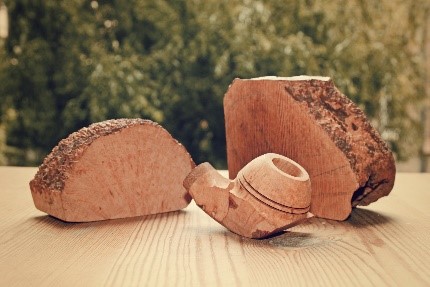 here is such a wide variety of pipes available on the market, and making this decision shouldn’t be entered into lightly. Here you will find a brief description of the most common types of pipe, highlighting their origin and information that you will find useful in making your selection. Once you have chosen the right one for you, there is a world of choice out there of designs and colours, textures and stems!
Briar Pipes
The Briar pipe is the most popular pipe in the world, owing its existence to a French smoker who in the 1820’s journeyed to Corsica only to find that when he got there his prized Meerschaum pipe had broken. He asked a local artisan to carve him a new pipe from the wood of the Bruyere (or Heath) tree that grew on that island. The Frenchman was so impressed with the pipe that he sent heath wood and roots to France and started making the Bruyere, or Briar pipe there.
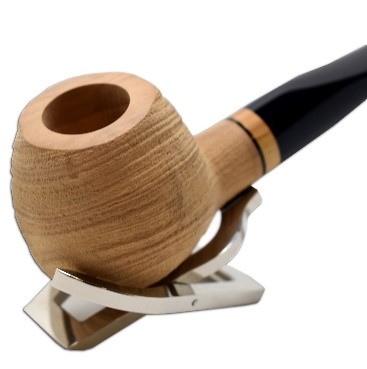 Briar comes from the closely grained root burl between the stem and roots of white heath, a large bush that is grown in Mediterranean countries such as Greece, France and Italy where the climate is intensely warm in summer and showery in the winter.
Good Briar takes a long time to grow, it is most suitable for pipe making between 30-80 years, but preferred at 60-80 years old. Any younger than 30 years and the wood is too small, and any older than this and it could develop cracks. When ready the briar is cut into ‘ebauchons’ and then boiled at the sawmills to kill off any bacteria and insects living on it. It is then aged by the pipe maker for 2-7 years.
The main advantage of a Briar Pipe is that the wood is hard yet lightweight and can have a beautiful grain giving it an appealing finish!
 Meerschaum Pipes
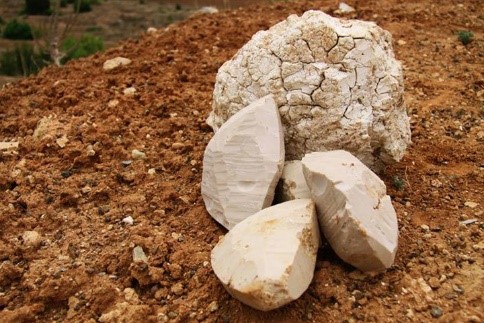
Meerschaum is a German word meaning ‘sea foam’. This is a mineral, hydrous silicate of magnesium, and is a one of the most porous substances found in nature. Meerschaum is composed of the fossils from tiny sea creatures that fell to the sea floor millions of years ago and is now found in red clay deposits. The best quality meerschaum is only found in red clay deposits from Eskisehir in Central Turkey.
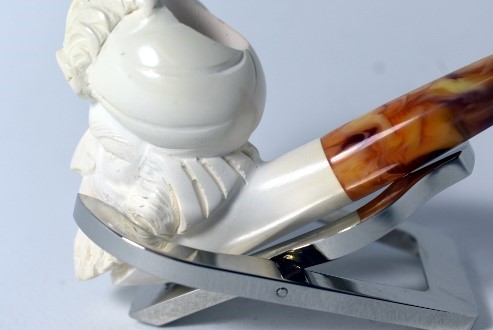 The first recorded smoke from a meerschaum pipe was in 1723 and then quickly became popular for providing a cool, dry, flavoursome smoke. They took over from clay pipes as being the preferred material until Briar pipes were made popular in the mid 1800’s.
Meerschaum pipes are still manufactured in Turkey where the material originates from and Turkish craftsmen still carve them by hand in a range of designs, favouring busts of Greek gods such as Cleopatra and Bacchus.
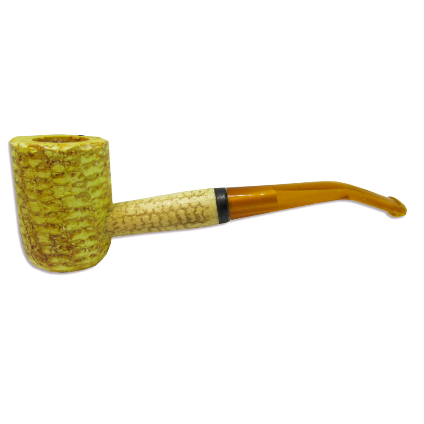 Corn Cob Pipes
As it sounds, a Corn Cob pipe is made from hollowed out corncob! They are commonly finished off with a wooden stem and cheap plastic mouthpiece. The inexpensive construction of these pipes means that they are ideal for a novelty budget pipe option.
These corncob pipes originated from America where a Dutch immigrant farmer, John Shranke, living in Washington started making pipes from hollowed our corncobs as a hobby. In 1869 he took one of his pipes to his friend’s shop, Henry Tibbe. Tibbe then made some improvements by filling in the uneven surface of the cob with Plaster of Paris, and then he started to sell them. Within a hundred years the production of these was massive, around 10 million were produced every year! The largest corncob manufacturer still uses the old Tibbe workshop as their headquarters to this day!
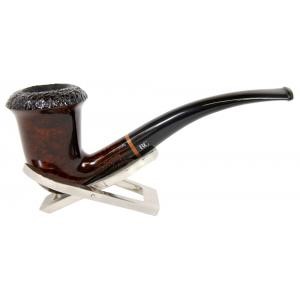
Calabash Pipes
A Calabash pipe is made from South African gourds that bend when growing forming the pipe shape. The gourd is cut from the tree when it reaches the desired size and shape. It is then dried, fitted with a cork gasket and meerschaum bowl. The labour-intensive production of these pipes makes them an expensive pipe to produce compared with other more popular pipes today. For this reason, many Calabash style pipes today are made with wood instead but keeping the same classic shape. A real Calabash pipe produces one of the coolest, driest smokes. They are large, lightweight and delicate and not as convenient to travel with as other more compact and robust pipes.
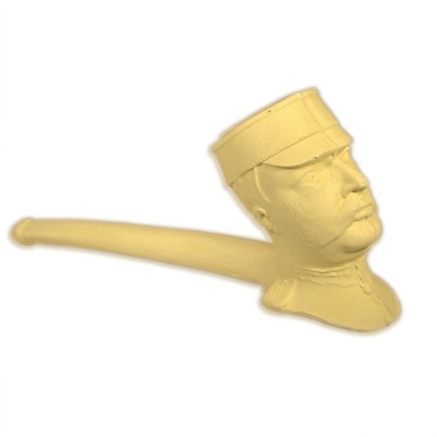 Clay Pipes
The history behind clay pipes in England is that they were made with small bowls because at the time tobacco was in low supply but high demand. So smokers had to indulge in small amount at a time making small bowl pipes perfect for their needs. Another reason for their being a small bowl is that clay pipes heat up very quickly.
It was the French that turned clay pipe making into a fine art. They moulded the bowls to depict religious, military and domestic scenes. In 17th century England there were 2 versions of clay pipe; the cutty which was basic and featured a small stem around 3 inches and the churchwarden which was more elaborately decorated and had a much longer stem at around 8-10 inches. The cutty were cheaper versions and popular with the lower class people, and the churchwarden were popular amongst the wealty who would also purchase elegant cases to keep them.
Clay pipes are very fragile and so their popularity has decreased more and more in recent years so much so that Sharrow Mills factory in the UK has stopped production of them. They can still be purchased, but are rarely used for smoking, instead are more of a collector’s item.
Written By - Hayley Hooker - 11/10/2019








Part of the Dominique London Group